How to Connect With Your Ancestors: Honoring Lineage, Wisdom & Healing
 Enid Rosa

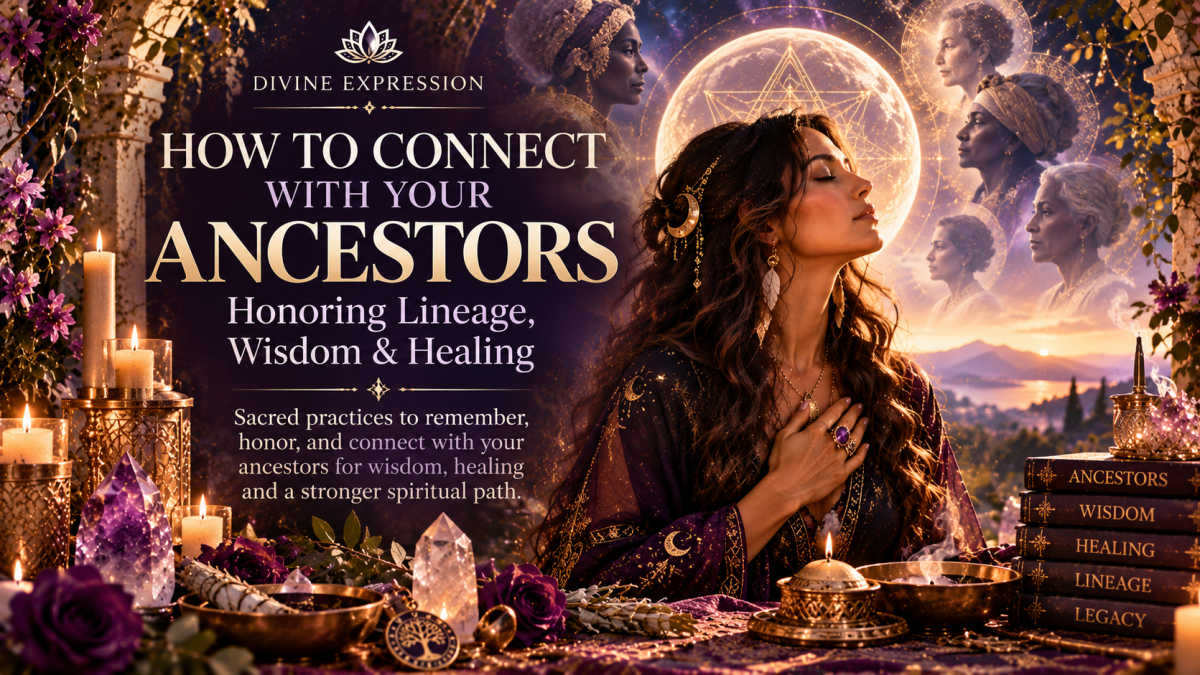
Learn how to connect with your ancestors through sacred practices that honor lineage, invite wisdom, support healing, and deepen spiritual connection.
There is something powerful about remembering that your story did not begin with you.
Before you took your first breath, there were generations of people who lived, loved, struggled, survived, created, dreamed, and made choices that eventually became part of the path that led to you.
Some of their stories may be known.
Others may have been forgotten.
Some may carry beautiful memories, traditions, and wisdom.
Others may hold pain that was never fully healed.
Connecting with your ancestors can be a sacred way of honoring where you come from while becoming more conscious about what you choose to carry forward.
But ancestral connection does not mean romanticizing the past.
It doesn't mean pretending every person in your lineage was loving, wise, or safe.
And it doesn't mean you are required to spiritually connect with family members who caused harm.
For me, ancestral work is about honoring lineage with discernment.
It is recognizing the wisdom that came before us, healing what we are ready to heal, releasing what no longer needs to continue, and consciously choosing what we want to carry into the generations that come after us.
The original teaching behind this article recognizes ancestral connection as a bridge between past, present, and future and includes blood, cultural, spiritual, and chosen ancestors—not only immediate biological relatives. 3. Ancestors and Witchcraft_ Bu…
What Is Ancestral Connection?
Ancestral connection is the intentional practice of remembering, honoring, learning about, or spiritually connecting with those who came before you.
For some people, this is deeply spiritual.
For others, it begins very practically.
You might research your genealogy.
Listen to family stories.
Prepare a recipe your grandmother used to make.
Learn about the land your family came from.
Keep photographs of loved ones.
Preserve traditions.
Pray for your ancestors.
Create a small ancestral altar.
Or simply sit quietly and acknowledge:
I am part of something larger than myself.
Ancestral connection doesn't have to be elaborate to be meaningful.
Sometimes the simplest act of remembrance becomes sacred when it is done with intention.
Why Ancestral Connection Can Be So Powerful
We often think about spirituality as reaching upward—toward the Divine, our Higher Self, angels, guides, or higher consciousness.
But there is also wisdom in remembering our roots.
Your lineage can help you explore questions such as:
Where did I come from?
What strengths were passed down to me?
What stories shaped my family?
What patterns have repeated through generations?
What traditions deserve to be remembered?
What am I ready to do differently?
This can create a deeper sense of identity and belonging.
It can also remind you that you are not simply inheriting a story.
You are participating in its continuation.
And that means you have choices about what happens next.
Who Counts as an Ancestor?
One of the beautiful things about ancestral practice is that ancestry can be understood in more than one way.
The source material identifies four broad categories of ancestral connection. 3. Ancestors and Witchcraft_ Bu…
Blood Ancestors
These are the people within your biological family line.
Parents.
Grandparents.
Great-grandparents.
And generations stretching far beyond the people whose names you know.
You do not need a complete family tree to acknowledge your lineage.
Cultural Ancestors
These may be people connected to your culture, homeland, community, or traditions.
Exploring cultural ancestry can help you reconnect with traditions, stories, values, music, food, spiritual practices, and ways of living that may have been lost or forgotten through generations.
This work is best approached with respect and curiosity rather than assuming that every practice associated with an ancestral culture automatically belongs to us.
Ancestry can open the door to learning.
It doesn't eliminate the need for discernment.
Spiritual Ancestors
There may also be teachers, mystics, healers, spiritual leaders, writers, artists, or wisdom keepers whose work profoundly shaped your spiritual path.
You may never have met them.
They may not share your bloodline.
Yet their teachings helped form part of your spiritual understanding.
Honoring their contribution can become another form of remembering those whose wisdom helped illuminate your path.
Chosen Ancestors
Family is not always defined by blood.
There may be people whose lives, love, courage, teachings, or presence deeply influenced who you became.
Some people feel a sense of kinship with individuals or communities that became part of their emotional or spiritual lineage.
That connection can also be honored.
You Do Not Have to Honor Harmful Ancestors
This deserves its own conversation.
Ancestral spirituality should never pressure you into honoring someone who abused, harmed, abandoned, or traumatized you.
You are allowed to have boundaries—even in ancestral work.
You might choose to connect only with:
loving ancestors,
healed ancestors,
benevolent ancestors,
ancestors aligned with Divine Love and your highest good,
or ancestors much further back in your lineage.
You may also decide that biological ancestor work isn't right for you at all.
That choice is valid.
The source specifically makes room for people with painful family histories to focus on older, wiser ancestors or cultural, spiritual, and chosen ancestors rather than forcing connection with harmful relatives. 3. Ancestors and Witchcraft_ Bu…
Ancestral healing should not require you to abandon the boundaries you've worked so hard to build.
Ancestral Healing Is Not About Blaming Your Ancestors
When we begin looking at family patterns, it can be tempting to search for someone to blame.
But that isn't the purpose of ancestral healing.
Our ancestors were human.
They lived within circumstances, beliefs, cultures, systems, relationships, and survival realities that shaped the choices available to them.
Some experienced poverty.
War.
Migration.
Loss.
Oppression.
Family separation.
Abuse.
Silence.
Grief.
Religious fear.
Or simply a world where emotional healing wasn't spoken about the way it is today.
Understanding this doesn't excuse harmful behavior.
But it can give us context.
Ancestral healing asks a different question:
What am I ready to stop carrying forward?
Perhaps there was a pattern of silence.
Overgiving.
Fear.
Scarcity.
Self-sacrifice.
Emotional disconnection.
Or women being taught to make themselves smaller.
You don't need to condemn the people who came before you to decide:
This pattern ends differently with me.
Sometimes honoring your ancestors means continuing their traditions.
And sometimes honoring them means healing something they never had the opportunity, safety, resources, or awareness to heal.
You Also Inherited Strength
Ancestral work can become overly focused on trauma.
But you didn't inherit only wounds.
Think about what it took for your lineage to continue long enough for you to be here.
There may also be stories of:
Resilience.
Creativity.
Faith.
Resourcefulness.
Intuition.
Leadership.
Healing.
Courage.
Devotion.
Community.
Survival.
Love.
Your spiritual practice can include asking:
What strength lives in my lineage?
What wisdom deserves to be remembered?
What gifts am I ready to reclaim?
What beautiful traditions deserve to continue?
Ancestral healing isn't only about clearing.
It can also be about remembering.
5 Simple Ways to Begin Connecting With Your Ancestors
You don't need an elaborate ceremony.
Start gently.
1. Learn Your Family Stories
Talk with relatives if doing so feels safe.
Ask about grandparents and great-grandparents.
Where did they live?
What were they known for?
What did they love?
What traditions did they practice?
What challenges did they overcome?
Write these stories down.
Small details can disappear surprisingly quickly when they're not preserved.
2. Research Your Lineage
Genealogy can become its own form of ancestral connection.
You might explore family records, photographs, locations, historical documents, cultural history, or migration stories.
You don't need to uncover everything.
Let curiosity guide you.
Sometimes discovering one name, photograph, or story creates an unexpected feeling of connection.
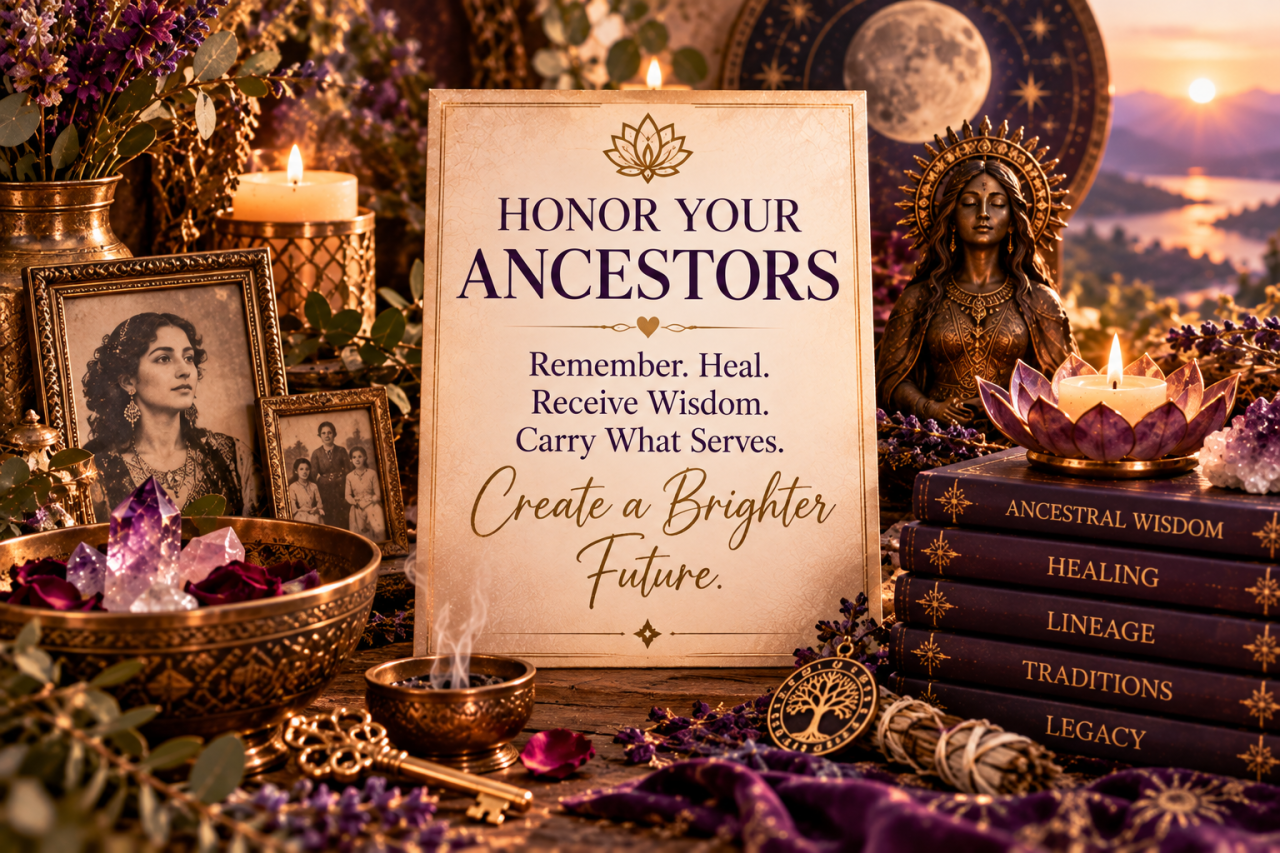
3. Create a Simple Ancestor Space
If it feels aligned, designate a small area in your home for remembrance.
You might include:
- a photograph
- an heirloom
- a candle
- flowers
- a glass or bowl of water
- a meaningful cultural symbol
- an object representing your lineage
Your ancestor space doesn't have to be visible to anyone else.
It doesn't even have to be permanent.
What makes it sacred is your intention.
4. Write to Your Ancestors
Journaling can be a beautiful way to explore ancestral connection.
Write a letter beginning:
To the loving and benevolent ancestors who came before me...
Tell them what is happening in your life.
Ask questions.
Share what you're healing.
Express gratitude.
Or write about what you wish had been different.
You don't have to expect an answer.
Sometimes the healing is simply allowing yourself to speak.
The source also suggests journaling and paying attention to dreams or meaningful experiences as part of a personal ancestral practice. 3. Ancestors and Witchcraft_ Bu…
5. Honor Them Through Everyday Life
Ancestral connection doesn't only happen at an altar.
Cook the family recipe.
Listen to the music.
Learn the language.
Plant something your grandmother loved.
Tell your children the stories.
Preserve photographs.
Visit meaningful places.
Continue a healthy tradition.
Create a new tradition.
Sometimes the most powerful way to honor those who came before us is simply to live consciously with what they gave us.
Do You Need an Ancestor Altar?
No.
An altar can be beautiful, but it isn't required.
You can connect through prayer, remembrance, genealogy, journaling, cultural exploration, family traditions, or quiet reflection.
If you do create an ancestor altar, keep it simple.
A photograph.
A candle.
Water.
Flowers.
An heirloom.
That's enough.
You don't need expensive spiritual tools.
And you certainly don't need an Instagram-perfect altar for your connection to be meaningful.
The source emphasizes that ancestral practices can remain simple and heartfelt and do not require elaborate rituals or complete knowledge of your family tree. 3. Ancestors and Witchcraft_ Bu…
What If You Don't Know Who Your Ancestors Are?
You can still practice ancestral remembrance.
Many people don't have access to complete family histories.
Records may have been lost.
Families may have become disconnected.
Adoption may be part of the story.
Migration may have separated generations.
Or family circumstances may make research difficult or undesirable.
You don't need names to acknowledge that people came before you.
You can simply say:
“I honor the loving and benevolent ancestors of my lineage whose names I know and whose names have been forgotten.”
Let that be enough.
What If You Don't Feel Anything?
That's okay too.
You don't need a dramatic spiritual experience.
You don't need to see an ancestor standing beside you.
You don't need to receive a sign.
You don't need a dream that night.
Spiritual connection doesn't have to prove itself through spectacle.
Sometimes ancestral practice simply creates reflection.
Sometimes it deepens gradually.
Sometimes it inspires you to learn about your family.
And sometimes it simply helps you understand yourself differently.
Let the practice be what it is without forcing it to become something extraordinary.
Honoring Is Not the Same as Worship
This distinction matters for many spiritually curious women, particularly those who come from faith traditions where ancestral practices may initially feel uncomfortable.
Honoring someone is not the same as worshiping them.
You can honor your grandmother without making her your God.
You can remember your ancestors while keeping your relationship with the Creator at the center of your spiritual life.
You can express gratitude for the people who came before you while still directing your prayer, devotion, and spiritual authority according to your own faith and beliefs.
The source likewise distinguishes ancestral honoring and connection from worship. 3. Ancestors and Witchcraft_ Bu…
Your ancestral practice should feel aligned with your spiritual values—not like something you're forcing yourself to believe.
A Simple Ancestral Connection Ritual
If ancestral connection feels meaningful to you, try this simple practice.
Choose a quiet space.
Place a candle before you.
If you have a photograph, heirloom, flower, or other meaningful object, place it nearby.
You may also place a small glass of water beside the candle, a simple offering included in the source practice. 3. Ancestors and Witchcraft_ Bu…
Take three slow breaths.
Ground yourself.
Then say:
Creator, surround me in Divine Light and guide this sacred moment.
I honor the loving, benevolent, and healed ancestors who came before me.
Those whose names I know and those whose names have been forgotten.
I give thanks for the life, wisdom, strength, and resilience that traveled through the generations before reaching me.
May only that which is aligned with Divine Love, truth, wisdom, and my highest good be welcome within this sacred space.
Help me recognize the wisdom that is mine to carry forward.
Help me release the patterns that are ready to end with me.
Help me remember the gifts, courage, and strength within my lineage.
May what I heal become a blessing forward and backward through the generations.
May I walk my path with greater wisdom because I remember that I did not begin here alone.
And so it is.
Sit quietly for a few moments.
You don't have to receive anything.
Simply breathe.
When you're ready, offer gratitude and close your practice.
Journal Prompts for Ancestral Healing and Connection
Use these prompts slowly. You don't have to answer them all at once.
What do I already know about my ancestors?
What stories were repeated in my family?
What traditions do I want to preserve?
What strengths do I recognize within my lineage?
What patterns am I no longer willing to carry?
What beliefs about love, money, safety, spirituality, success, or womanhood may have traveled through my family?
What would I like future generations to inherit from me instead?
And perhaps the deepest question:
What am I here to continue—and what am I here to complete?
You Are Part of the Lineage Too
We often speak about ancestors as though they exist only behind us.
But one day, you will be the ancestor.
Your choices are becoming part of the story.
The boundaries you establish.
The healing you choose.
The love you give.
The beliefs you question.
The traditions you preserve.
The patterns you interrupt.
The wisdom you pass forward.
This is what makes ancestral work so powerful.
You aren't only looking backward.
You are standing at the meeting point between what was and what will be.
Some things came through your lineage to be cherished.
Some came through to be transformed.
Some came through so that you could finally say:
This ends here.
And other things may be waiting for you to say:
This wisdom continues through me.
That is the sacred responsibility—and sacred possibility—of remembering where you come from.
Ready to Explore What You Are Carrying?
If you feel that old family patterns, inherited beliefs, or deeper spiritual themes may be influencing your present path, a Private Intuitive Session can give you sacred space to explore what is surfacing and what may be ready for healing, release, or deeper understanding.
You can also explore my related healing, spiritual empowerment, and energy-clearing resources for practices that support deeper self-awareness, boundaries, release, and reconnection with your own inner wisdom.
Related Posts
Add your internal links here when publishing:
- How to Create Your Own Spiritual Path and Trust What Feels True for You
- 7 Ways to Protect Your Energy and Maintain Your Spiritual Peace
- How to Listen to Your Inner Voice: 4 Ways to Strengthen Your Intuition
- What Is Spirituality? For Women Awakening to Their Soul Path
- Prayer and Aligned Action: How to Spiritually Move Toward the Life You Desire
Disclaimer
This article explores ancestral connection from a spiritual and personal-reflection perspective. Spiritual experiences and beliefs about ancestors vary across cultures, religions, and individuals. Ancestral practices should be approached with discernment and respect for cultural traditions. Ancestral healing practices are not substitutes for qualified mental health, medical, or other professional support when addressing trauma or significant emotional distress.
Categories: : Shadow Work, Spirituality