How to Create a Sacred Altar: A Simple Spiritual Space for Prayer, Intention & Connection
 Enid Rosa
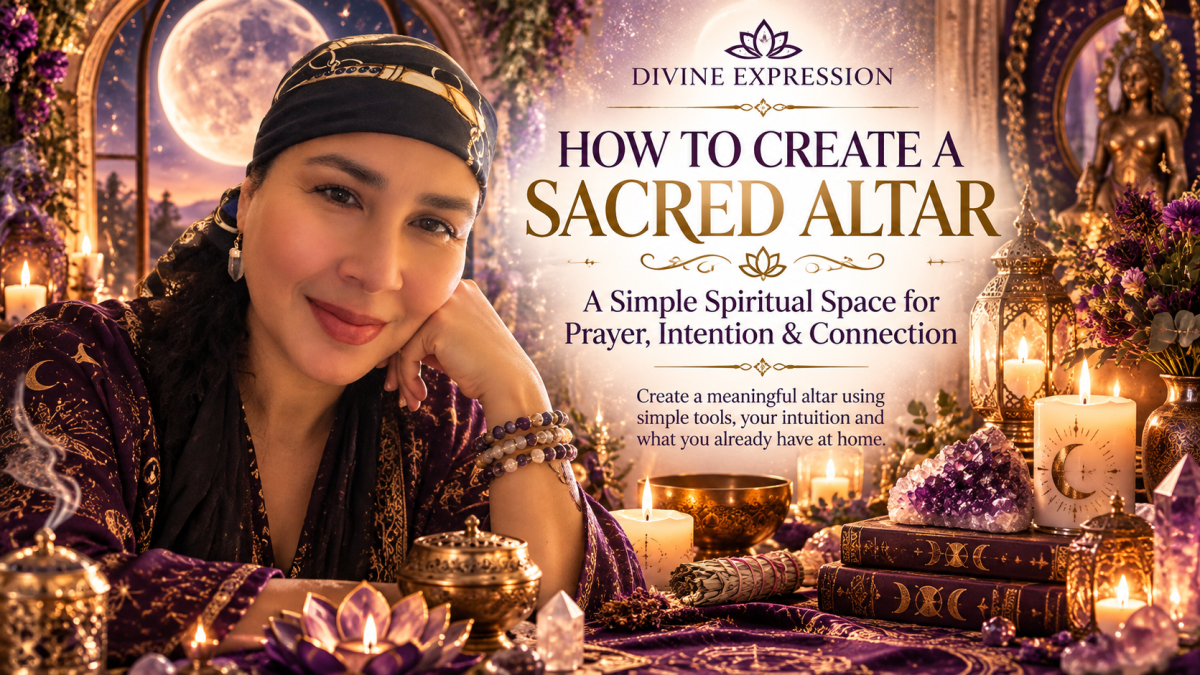
Learn how to create a sacred altar for prayer, meditation, intention, and spiritual connection using meaningful items you already have at home.
how to create a sacred altar, spiritual altar, altar setup, sacred space at home, spiritual altar ideas, home altar, prayer altar, meditation altar, spiritual practice
Your spiritual practice doesn't have to happen somewhere far away from your everyday life.
Sometimes the most sacred space is a small corner of your bedroom.
A shelf beside your favorite chair.
A candle on your nightstand.
A quiet place where you can sit, breathe, pray, meditate, journal, pull a tarot card, or simply come back to yourself.
Creating a sacred altar gives your spiritual practice a physical home.
It doesn't have to be elaborate.
It doesn't have to be expensive.
And it certainly doesn't have to look like the beautiful altars you see on Pinterest or social media.
Your altar isn't sacred because of how it looks. It's sacred because of the intention you bring to it.
The foundation is simple: an altar can be permanent or temporary, elaborate or minimal, and may serve as a focal point for intention, ritual, spiritual tools, and personal symbols. 2. Altar Setup 101
What Is a Spiritual Altar?
A spiritual altar is an intentional space you dedicate to your spiritual practice.
Think of it as a physical reminder:
This is where I return to myself.
This is where I connect with the Divine.
This is where I become still enough to listen.
Depending on your beliefs and spiritual path, you might use your altar for:
Prayer.
Meditation.
Journaling.
Tarot or oracle readings.
Reiki.
Intention setting.
Manifestation.
Moon rituals.
Ancestral connection.
Energy healing.
Connecting with your Higher Self.
Or simply sitting quietly at the beginning or end of your day.
Your altar can become both a spiritual anchor and a sanctuary—a place that reminds your body, mind, and spirit that it is time to slow down and turn inward. 2. Altar Setup 101
Your Altar Doesn't Have to Look “Spiritual”
This is important.
You don't need an entire collection of crystals.
You don't need statues.
You don't need expensive candles.
You don't need a giant altar table.
You don't even need a separate room.
A spiritual altar can be as simple as:
a candle + a meaningful object + your journal.
That's enough.
Your sacred space can be minimalist, colorful, traditional, celestial, earthy, feminine, Christian, mystical, modern, or so subtle that no one else would recognize it as an altar. 2. Altar Setup 101
This is your spiritual space.
Create something that makes you want to return.
Why Create a Sacred Space at Home?
We're constantly moving through different roles.
Mother.
Partner.
Business owner.
Caregiver.
Employee.
Friend.
Leader.
Healer.
Creator.
Sometimes we become so accustomed to responding to everyone and everything around us that we forget to create intentional space to hear ourselves.
Your altar becomes an invitation to pause.
When you sit there, you can begin teaching yourself:
I don't have to perform here.
I don't have to solve anything right now.
I am allowed to listen.
Over time, simply approaching your altar may become a signal that it's time to ground, center, and reconnect.
What Should You Put on a Spiritual Altar?
There are no universal requirements.
Choose items that have meaning for you.
The source suggests beginning with simple elemental and personal symbols rather than feeling pressured to purchase special tools. 2. Altar Setup 101
Here are a few ideas.
A Candle
A candle can symbolize Divine Light, illumination, prayer, transformation, intention, or the element of fire.
Lighting your candle can also become a simple ritual that marks the beginning of your sacred time.
As the flame appears, you might silently say:
I am present.
Crystals or Stones
If crystals are part of your spiritual practice, choose one or two that support the energy you want to cultivate.
You might also use an ordinary stone collected from somewhere meaningful.
It doesn't have to be expensive to be sacred.
Water
A small bowl or glass of water can represent cleansing, emotion, intuition, flow, or the element of water.
If you're creating an ancestral altar, water can also become a simple offering.
Something From Nature
Flowers.
Leaves.
Shells.
Feathers.
Soil.
Branches.
Herbs.
A stone from a meaningful place.
Natural objects can remind us that spirituality isn't separate from the Earth.
Sacred or Spiritual Symbols
You might include a cross.
Angel.
Lotus.
Sacred geometry.
Prayer beads.
Image of Christ.
Divine Feminine imagery.
A meaningful spiritual symbol.
Or something representing your Higher Self or connection with the Creator.
Choose what genuinely aligns with your beliefs.
Photographs or Heirlooms
If you're creating space for ancestral remembrance, you may want to include photographs or family heirlooms.
You might also include photographs of people you love, spiritual teachers, or something representing the lineage you wish to honor.
Tarot or Oracle Cards
If divination is part of your spiritual practice, your altar can be a beautiful place to keep your favorite deck.
You might also select one card and place it on your altar as the energy, archetype, or message you're currently working with.
Your Journal
Keep a journal nearby for prayers, dreams, intuitive messages, intentions, reflections, or anything that arises during your practice.
Your altar doesn't only have to be a place where you receive.
It can also become a place where you reflect and integrate.
The Four Elements on Your Altar
If working with the elements resonates with you, you can create a simple elemental altar.
The source suggests uncomplicated representations for each element: a candle for fire, water for water, a feather or incense for air, and salt, soil, or stone for earth. 2. Altar Setup 101
Earth
Stone, crystal, soil, plant, flower, salt
Air
Feather, incense, breath, bell
Fire
Candle, flame
Water
Small bowl or glass of water, shell
You don't need all four.
But if you're drawn to elemental spirituality, having these symbols together can create a beautiful reminder of balance.
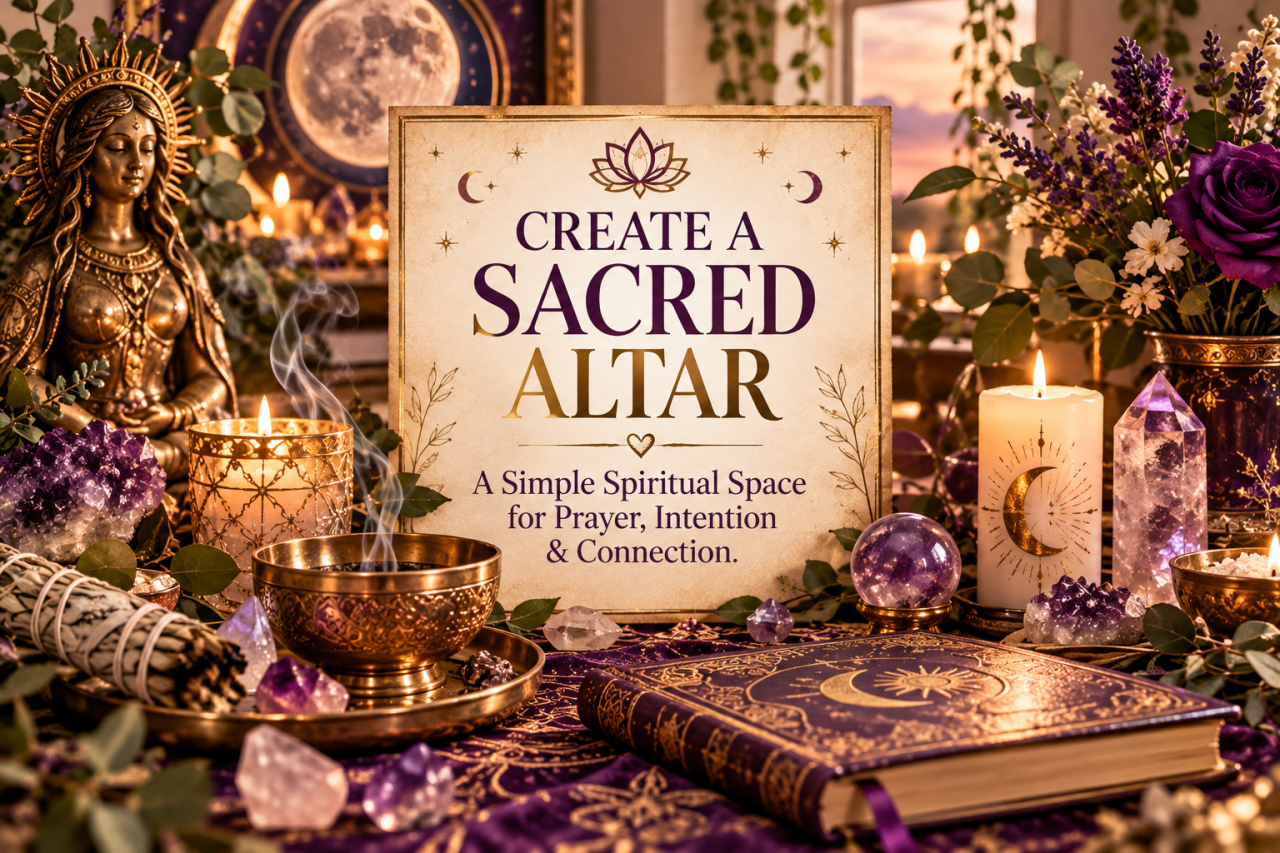
Different Types of Spiritual Altars
Your altar can change depending on what you're working with spiritually.
The source describes permanent, seasonal, working, and travel altars, allowing the space to shift with the practitioner's needs. 2. Altar Setup 101
Daily Spiritual Altar
This is your everyday sacred space.
You might use it for morning prayer, meditation, journaling, or your evening spiritual practice.
Seasonal Altar
Allow your altar to change with nature.
Spring flowers.
Autumn leaves.
Winter greenery.
Summer herbs.
You might also shift your altar with the Solstices, Equinoxes, or other seasonal transitions that are meaningful to you.
Moon Altar
If you work with lunar cycles, your altar might shift around the New Moon and Full Moon.
You can place your intentions there during the New Moon or create space for reflection and release around the Full Moon.
Ancestor Altar
Your ancestor altar may include photographs, heirlooms, flowers, candles, water, or meaningful symbols of your lineage.
This can be separate from your everyday spiritual altar if that feels more aligned.
Intention or Manifestation Altar
You can also temporarily dedicate an altar to something you're intentionally creating.
Perhaps you're working with:
Abundance.
Healing.
Love.
Visibility.
Purpose.
Creativity.
A new business.
A major transition.
Place your written intention there along with objects that symbolize the energy you're cultivating.
Travel Altar
Your sacred space doesn't have to stay home.
A small box, pouch, or container can hold a few meaningful objects you take with you when traveling.
The point isn't how much you carry.
It's having something that helps you reconnect with yourself wherever you are.
How to Create Your First Sacred Altar
You don't need to overthink this.
Step 1: Choose Your Space
Find somewhere that feels comfortable and practical.
A shelf.
Nightstand.
Desk.
Small table.
Window ledge.
Corner of a dresser.
Even a drawer can become a private sacred space that you open when you're ready to practice. 2. Altar Setup 101
Choose somewhere you can realistically return to.
Step 2: Physically Clean the Area
Before adding anything, clear the space.
Dust it.
Remove clutter.
Wipe the surface.
This simple act creates a transition from an ordinary surface into something you're intentionally preparing.
Step 3: Energetically Clear the Space
Use whatever method aligns with your beliefs.
You might use:
Prayer.
Reiki.
Sound.
Incense.
Visualization.
A bell.
Sacred smoke where appropriate.
Or simply place your hands over the space and imagine Divine Light filling it.
You don't need an elaborate cleansing ritual.
Your intention is enough to begin.
Step 4: Add a Few Meaningful Objects
Start small.
Perhaps:
A candle.
A crystal.
A bowl of water.
A flower.
A spiritual symbol.
Your journal.
Don't overcrowd the space simply because you think an altar is supposed to contain certain things.
Let every object have a reason for being there.
Step 5: Set the Intention for Your Altar
This is the piece that transforms the space.
Stand or sit before your altar.
Take several slow breaths.
Place your hands over your heart.
Then say:
This space is sacred.
I dedicate this altar as a place of Divine connection, truth, prayer, healing, and remembrance.
May only that which is aligned with Divine Love and my highest good be welcomed here.
May this be a place where I can quiet the noise, hear my inner wisdom, and remember who I am.
May everything I practice here serve my healing, growth, spiritual discernment, and highest path.
And so it is.
Your altar is ready.
Your Altar Is Meant to Be Used
It can be easy to create a beautiful altar and then become afraid to disturb it.
But your altar isn't a museum.
It's a living spiritual space.
Use it.
Light your candle.
Move things.
Pull cards.
Pray.
Cry.
Journal.
Meditate.
Place intentions there.
Sit silently.
Bring your tea.
Talk to God.
Ask your Higher Self a question.
Do Reiki.
Reflect on your dreams.
Give thanks.
The source similarly encourages actively using the altar for meditation, divination, intention setting, ritual, and seasonal or lunar changes rather than treating it purely as decoration. 2. Altar Setup 101
Let your altar become part of your actual spiritual life.
A Simple 5-Minute Altar Practice
You don't need an hour-long ritual every morning.
Try this.
Sit before your altar.
Light your candle.
Take three grounding breaths.
Place your hand over your heart.
Then say:
I return to myself.
I return to Divine presence.
I release what is not mine to carry.
I open myself to truth, wisdom, clarity, and grace.
Then ask:
What do I need to remember today?
Sit quietly.
You may receive a thought.
A feeling.
A word.
An intuitive nudge.
Or nothing at all.
That's okay.
Choose one intention for your day.
Perhaps:
Today I choose peace.
Today I choose courage.
Today I trust myself.
Today I welcome clarity.
Today I honor my boundaries.
Take one final breath.
Blow out your candle if you're leaving the space.
And carry the intention with you.
A simple practice of lighting a candle, grounding, acknowledging meaningful altar objects, and speaking an intention is also at the heart of the source's beginner ritual. 2. Altar Setup 101
Let Your Sacred Space Evolve With You
Your altar doesn't need to stay the same forever.
In fact, it probably shouldn't.
You change.
Your spiritual practice changes.
The seasons change.
Your intentions change.
What you're healing changes.
What you're calling forward changes.
So allow your altar to evolve too.
Remove what no longer feels meaningful.
Bring in something new.
Change the flowers.
Move the crystals.
Add a new spiritual symbol.
Place a prayer there.
Change the altar cloth.
Simplify everything.
You may even go through a season when you need nothing but a candle.
That's okay.
The source describes the altar as a living space that can be refreshed and rearranged as your spiritual needs change. 2. Altar Setup 101
Your sacred space should support your spirituality—not become another obligation.
Your Sacred Space Is a Reflection of Your Relationship With the Divine
You don't need the perfect altar.
You don't need more tools.
You don't need someone else's version of spirituality.
What matters is the relationship you're cultivating.
Your altar simply gives that relationship somewhere to land in your physical world.
A candle becomes a reminder to pause.
A crystal becomes a reminder of your intention.
A photograph becomes remembrance.
A journal becomes conversation.
A bowl of water becomes cleansing.
A flower becomes gratitude.
And an ordinary corner of your home becomes somewhere you intentionally return to the sacred.
Start small.
Let it grow naturally.
Let it become yours.
Because the most beautiful altar isn't necessarily the one with the most spiritual objects.
It's the one that helps you remember your connection to the Divine and return to yourself.
Ready to Deepen Your Spiritual Practice?
If you're creating a spiritual practice but aren't sure how to deepen your intuition, recognize your guidance, or understand what your soul is calling you toward, a Private Intuitive Session can give you sacred space to explore what is unfolding for you.
You can also explore my Developing Intuition, spiritual empowerment, and energy-clearing resources for practices you can incorporate into your sacred space and everyday spiritual life.
Related Posts
Add your internal links here when publishing:
- How to Create Your Own Spiritual Path and Trust What Feels True for You
- How to Connect With Your Ancestors: Honoring Lineage, Wisdom & Healing
- How to Listen to Your Inner Voice: 4 Ways to Strengthen Your Intuition
- 7 Ways to Protect Your Energy and Maintain Your Spiritual Peace
- Prayer and Aligned Action: How to Spiritually Move Toward the Life You Desire
Disclaimer
This article is intended for spiritual exploration, education, and personal reflection. Spiritual practices and sacred symbols vary across religions, cultures, and traditions. Create your sacred space in a way that respects your beliefs and the traditions from which specific practices originate. Always use candles, incense, and other flame or smoke-producing items safely.
Categories: : Ritual, Spirituality